

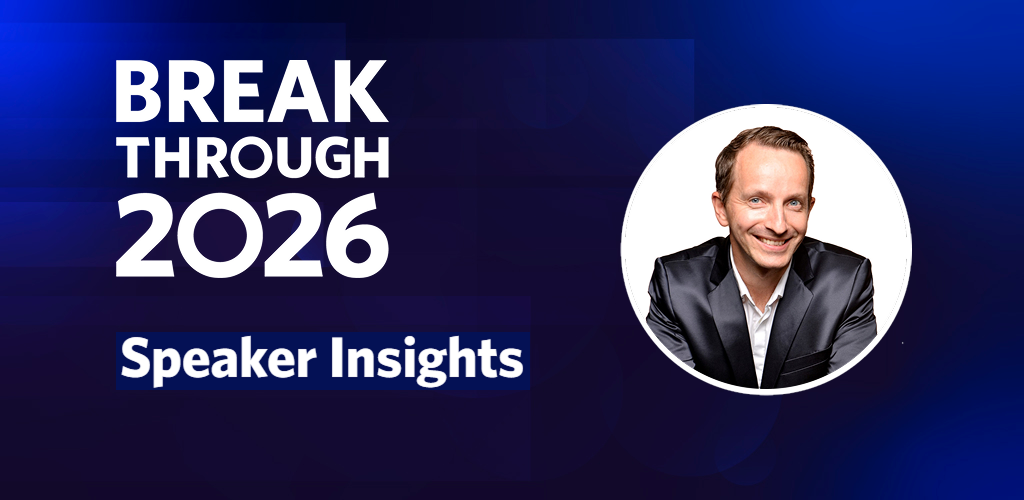
Author: Denny Lorenz, Managing Director and Principal Consultant, Lorenz Bratti GmbH
On December 4th, CIOMS Working Group XIV, an AI working group of the Council for International Organizations of Medical Sciences, formally published its long-awaited guidance on the use of artificial intelligence or intelligence augmentation in the context of pharmacovigilance.
The guidance, which has been in development for three years, has been honed to account for GenAI’s rapid and continuing advancement. In the light of this accelerating pace of technology change, CIOMS XIV now advocates a series of principles for safe AI adoption, recognizing that rigid rules that are agreed on could soon be rendered obsolete. Beyond PV, the principles have much to offer to other adjacent disciplines including regulatory operations.
The details of the principles, and their value as a practical benchmark now, will be the subject of a presentation and panel discussion on Day 2 of Breakthrough 2026.
Driving next implementations
For life sciences companies that have been in a state of inertia, worried about deploying AI in a PV or regulatory context, the publication of the CIOMS XIV guidance and the panel debate at February’s Breakthrough event will help to cement what is possible and provide confidence around how to move forward.
For organizations that have already forged ahead, keen not to be left behind, this is an opportunity to check and realign activities according to emerging best practice. Now the discussion can move on from “Can we build an AI system that can do X?” to “Can we run AI responsibly in a regulated environment?”. As the industry’s ambitions for AI grow, such an assurance matters increasingly.
The discussion will extend beyond a drug safety/PV context, too. Just as AI offers to help streamline the traditionally labor-intensive process of generating safety reports, it has considerable potential for regulatory use cases and shared applications.
A foundational focus
Where companies have long been advised to work toward a common data foundation, to enable greater efficiencies that span more than one function, there is now even greater potential. The logical extension of this premise is to establish AI foundational models – those that know the company’s particular substances and medicines in each market, for instance, and are able to coordinate these insights for use in broader decision-making and automation support.
Take, for instance, the reference safety information used for the package inserts provided for patients with medicines. Although this element is usually dealt with by the regulatory function, much of the information comes from safety or is considered for safety assessments. A common, reliable data foundation would make it possible to do more with that data, including applying AI to augment skilled human activity.
The same concept could be extended beyond company boundaries, too – for instance, aiding collaboration with regulators.
A powerful benchmark to build on
Harnessing guiding principles will help organizations work toward all of these possibilities, building confidence as they go.
Although CIOMS XIV is not binding (e.g. as part of regulatory requirements), the guidance is the output of extensive collaboration by the regulators and industry as well as academia. It has been the subject of formal consultation, and has been agreed and accepted by stakeholders. Adherence is therefore likely to be expected and looked for during audits.
We will unpack all of this during the session at Breakthrough, addressing questions ranging from how to practically apply the recommended AI principles now, to the implications for upskilling as AI becomes more prevalent in augmenting human skills.
I look forward to seeing you there!
Denny Lorenz, Managing Director and Principal Consultant at Lorenz Bratti GmbH, has spent more than two decades working in Safety and Pharmacovigilance. He is an active member of the CIOMS XIV working group.
On Day 2 (February 11) at Breakthrough 2026, Denny will lead a panel session as part of the stream on Codifying AI in Life Sciences: Frameworks, Oversight & Operational Autonomy. Other panelists will include Hans-Jörg Römming of Merck Healthcare.
The session, From Guidance to Action: What CIOMS XIV Means for the Future of AI in Safety and Regulatory, will explore:
- How the new guidance can help drug safety and regulatory functions move toward fully operational AI at scale;
- Practical steps for responsible AI adoption;
- How to balance human involvement, ensure transparency and robustness, and create accountability frameworks.