


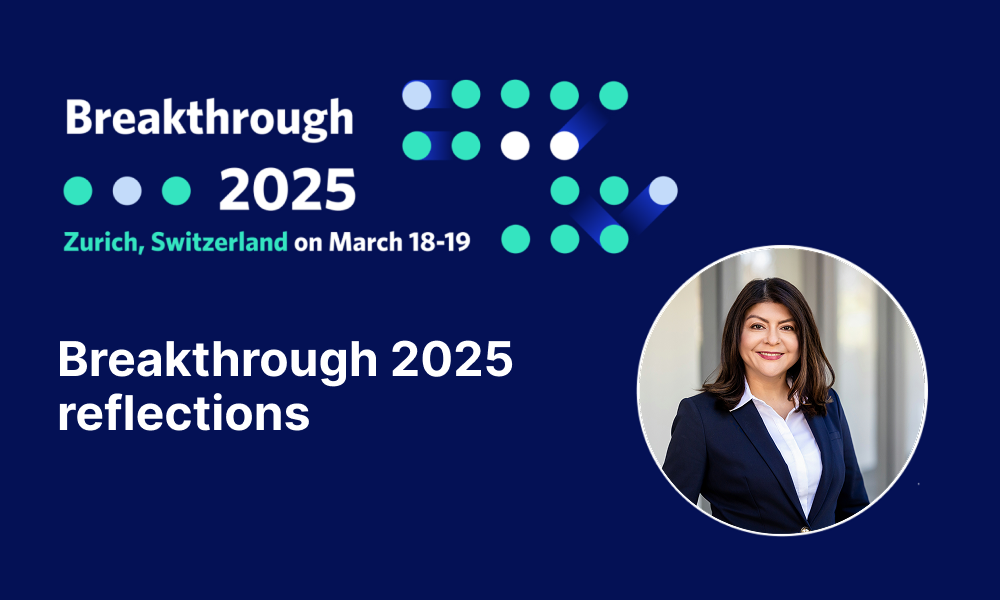
At Breakthrough 2025 in Zurich, Griselda Saldana, Senior Director of Global Safety at Amgen, delivered a powerful reminder that in the rush to embrace AI, digital tools, and automation, technology alone will not guarantee success. The missing link in many transformation programs, she emphasized, is effective Organizational Change Management (OCM). 
“Digital transformation is not just about systems—it’s about people,” she said. “If you don’t bring your organization along, even the best technology will fail to deliver on its promise.”
Saldana’s message resonated in a year when many pharmaceutical companies are replacing legacy safety systems and embedding advanced capabilities such as natural language processing (NLP) and Generative AI (GenAI). With these changes come operational upheavals that require deliberate, people-focused strategies.
Amgen’s Perspective: Making Change Management a Core Workstream
For large-scale system implementations—especially those involving safety databases, AI-powered tools, and multiple vendors—Saldana stressed that OCM must be planned and resourced from the outset. “When change management is built into the project structure from day one, you see smoother transitions, higher user adoption, and a faster return on investment,” she explained.
Five Key Principles for Success
Drawing from experience, Saldana shared five essential elements for making transformation stick:
- Engage Stakeholders Early and Often
From business SMEs to case processing vendors, early and active involvement helps surface issues before they become blockers. Scenario testing, pilot sessions, and iterative feedback loops are invaluable for building alignment and managing risk. - Train with Purpose, Communicate with Clarity
Role-specific training and tailored communications are critical. Teams need to understand how the new technology works, what’s changing, and—most importantly—why it matters. - Position Technology as a Partner, Not a Threat
Whether implementing NLP or GenAI, framing automation as a way to support—not replace—human expertise helps reduce resistance and fosters collaboration. - Keep Going Post-Go-Live
Change management doesn’t end at launch. Continuous engagement, structured feedback collection, and clear KPIs help measure value and drive ongoing improvement. - Balance Speed with Sustainability
The pace of AI adoption is accelerating, but rushing implementation without proper change management can lead to missed opportunities or rework.
A Strategic Imperative for the Industry
Saldana’s session underscored a central theme of Breakthrough 2025: digital transformation in pharma is as much about mindset as it is about machinery. For organizations aiming to operationalize AI responsibly and sustainably, investment in change management is not optional—it’s a strategic imperative.
As she put it: “Technology can open the door to transformation. But it’s your people who walk through it.”